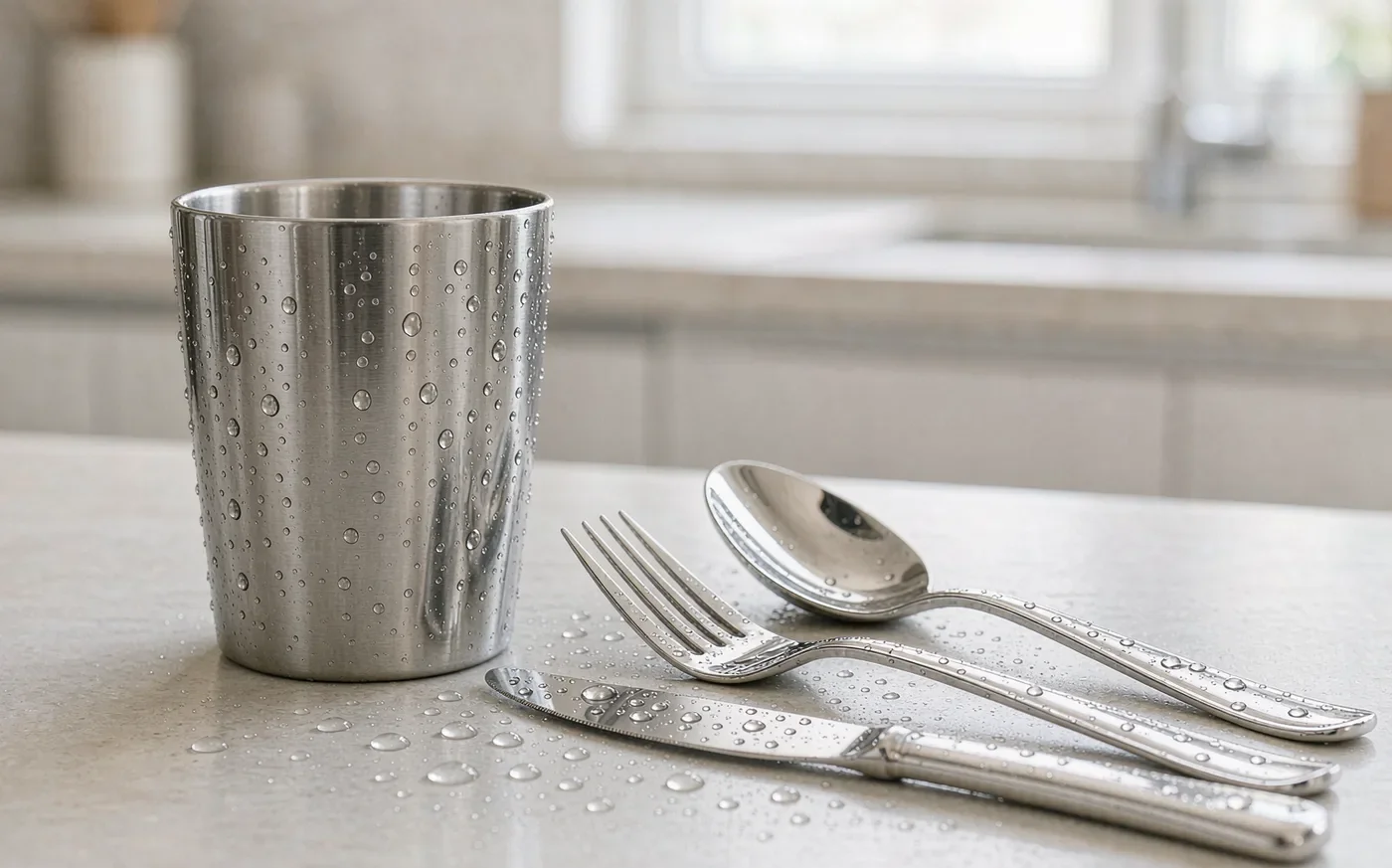
Yes — if it is genuine 304 (18/8). A well-made 304 spoon or straw is unaffected by years of dishwasher cycles: the chromium-nickel composition keeps its passive layer intact against detergent, heat and salt. The cutlery that comes out of the dishwasher spotted, pitted or rusted is almost always a lower-nickel grade — typically 430 or 200-series steel — sold at a 304 price point.
This is exactly why the grade question is the first thing we ask a new buyer to pin down in writing.
Dishwasher detergent is mildly abrasive and chloride-rich, and the machine holds hot, salty water against the steel for an hour at a time. On low-nickel steel this attacks the surface: first water spots, then pin-hole pitting, then visible rust bloom. None of that happens on 304 under normal household conditions — which is also why mill certificates matter more than shine when you choose a supplier.
Most one-star reviews for "rusty stainless steel" trace back to care instructions that were never printed. A defensible label for a 304 set reads: "Dishwasher safe. Rinse after contact with salt, vinegar or lemon. Dry after cycle for best finish." For 430 serving pieces: "Hand wash and dry immediately." We print care panels in the destination market's language as part of our custom packaging service.
Write three things into the purchase order: the grade per component (with mill certificate attached to shipments), the finish, and the intended care claim. If a supplier will not put "SUS304, food-contact" in writing with a certificate, the dishwasher will find out before you do — at the cost of your return rate.
Occasional cycles are usually fine, but 430 has lower corrosion resistance and can spot or pit with regular dishwashing, especially with salty or acidic food residue. For daily-dishwasher products, specify 304.
Most often the grade was not what the listing claimed — 430 or 200-series steel sold as stainless. A magnet test and a nickel spot-check give a quick indication; a mill certificate gives proof.
We recommend hand washing for coloured coatings. The coating layer is more vulnerable to aggressive detergent than the steel beneath it, and a worn patch is very visible.
Send us the product, quantity and your market — we reply within 24 hours with pricing, sampling options and a realistic production schedule.
Request a quote WhatsApp us