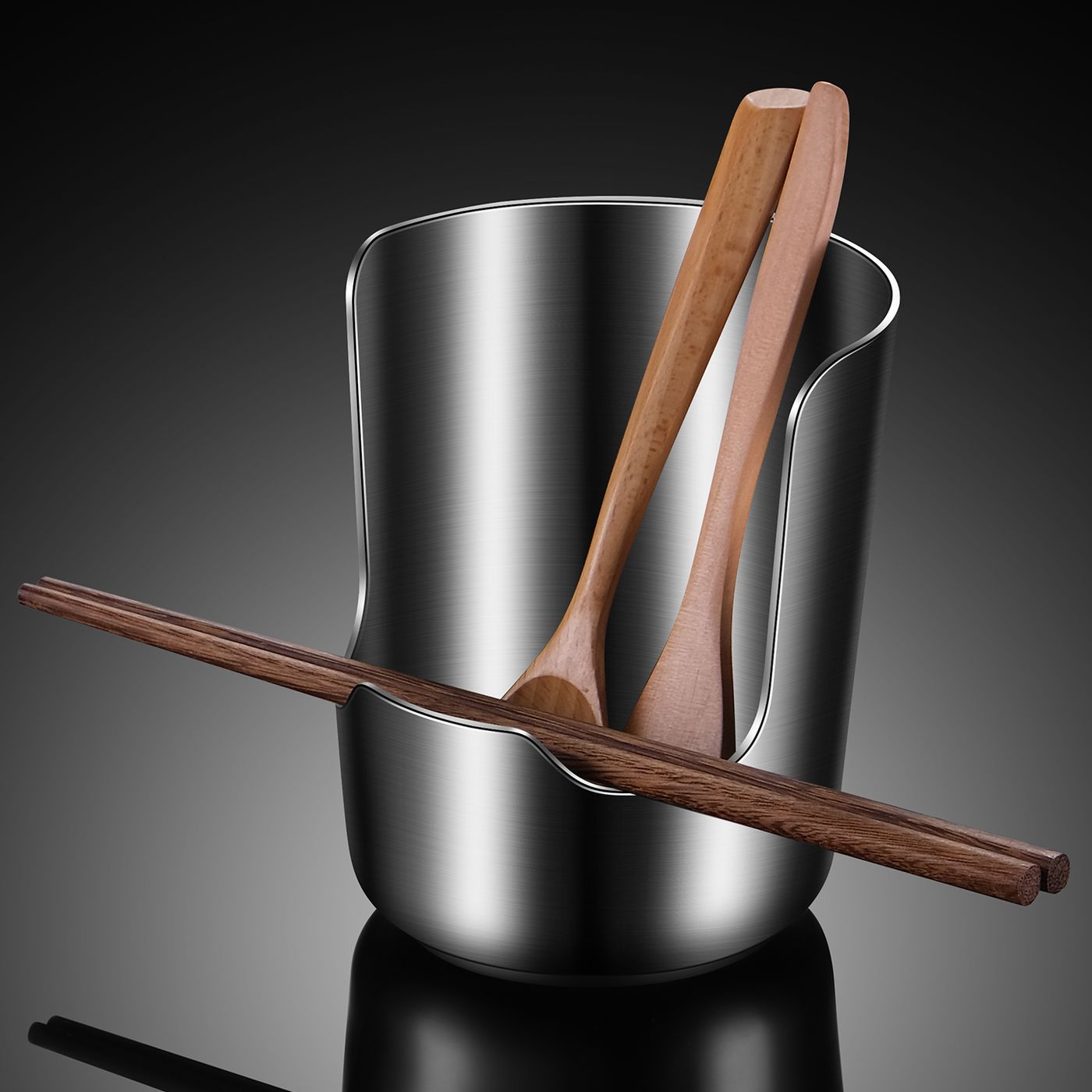
Ask any two suppliers for a "stainless steel fruit platter" and you may get quotes 30% apart. The gap is usually not margin — it is the steel grade. 304 and 430 look identical when polished, weigh almost the same, and both are described as "stainless". They behave very differently after six months in a dishwasher or a coastal kitchen.
Getting the grade wrong does not just cost you refunds. For food-contact goods sold into the EU or North America, it can mean failing a buyer's incoming inspection or a marketplace compliance check.
| 304 (18/8) | 430 | |
|---|---|---|
| Composition | ~18% chromium, ~8% nickel | ~16–18% chromium, almost no nickel |
| Corrosion resistance | Excellent — resists salt, acids, detergents | Moderate — can spot or rust in humid/salty use |
| Magnetic? | No (non-magnetic after forming) | Yes (ferritic) |
| Food-contact acceptance | Accepted in EU, US, Japan, Middle East | Accepted for many items, but some EU buyers restrict it |
| Typical use | Straws, drinkware, cutlery, anything wet or acidic | Decorative trays, stands, dry-serving pieces |
| Price | Higher and more volatile (nickel) | Lower and more stable |
Any product that holds liquid or acidic food for a meaningful time should be 304. That includes reusable straws, tumblers, dessert cups, and cutlery that goes through dishwashers daily. The 8% nickel content is what keeps the surface passive — it is the reason 304 survives tomato sauce and dishwasher salt when 430 does not.
430 still has a legitimate place: serving platters and cake stands that hold dry food, decorative pieces, and price-driven promotional programmes where the item has a short intended life. We quote 430 openly when a customer's budget requires it — the mistake is quoting it without saying so.
430 is used for many food-contact items and is generally accepted, but it has lower corrosion resistance than 304. For products that hold liquid or acidic food, or that go through dishwashers daily, EU and North American buyers usually specify 304. If your customer has a compliance checklist, follow it rather than assuming.
Nickel. 304 contains roughly 8% nickel and 430 contains almost none, so 304 tracks the nickel market and costs more per kilo. On a typical order the difference is far smaller than the cost of a single returned shipment.
Yes, and many buyers do: 304 for straws and drinkware, 430 for decorative trays. Just specify the grade per item in writing so the quotation is comparable and the inspection is unambiguous.
Send us the product, quantity and your market — we reply within 24 hours with pricing, sampling options and a realistic production schedule.
Request a quote WhatsApp us