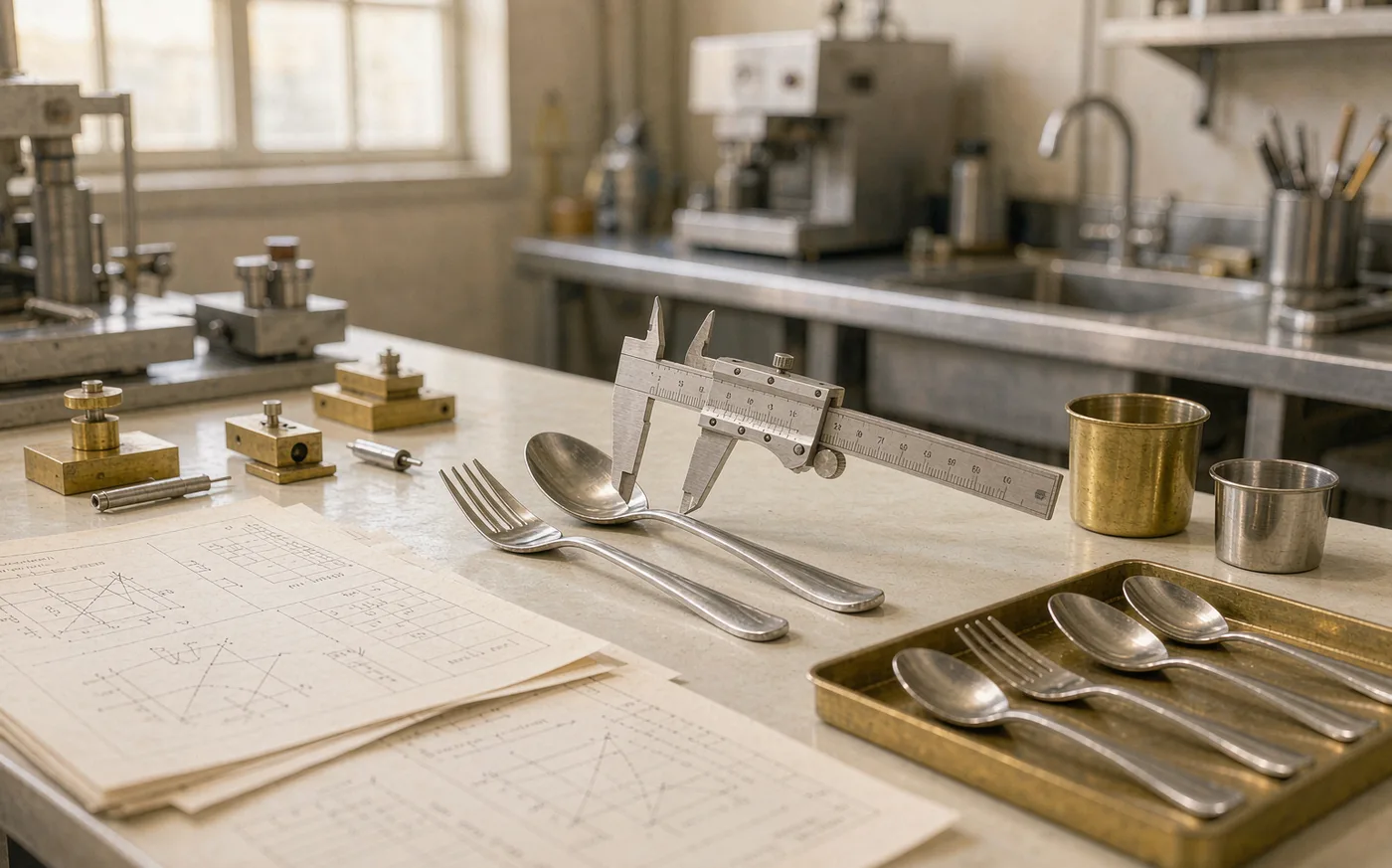
OEM (Original Equipment Manufacturing) means you bring the design — or a sample you want copied — and the factory produces it to your specification. The tooling is yours, the drawing is yours, and in a good partnership the factory will not sell that design to anyone else.
ODM (Original Design Manufacturing) means the factory already makes the product; you choose from the catalogue and put your brand on it. Faster, cheaper, and the right answer for most first programmes — but the same catalogue item is usually available to your competitors.
| ODM (catalogue + your logo) | OEM (your design) | |
|---|---|---|
| Tooling cost | None — existing tooling | New moulds/dies, quoted per item |
| Sampling time | 3–7 days (logo sample) | 5–15 days after drawings are finalised |
| MOQ | From 100 pcs (stock items) | Typically 500 pcs to amortise tooling |
| Exclusivity | Open catalogue | Contractual — your tooling, your design |
| Price | Catalogue price | Higher unit cost at low volume, better at scale |
| Best for | Testing a market, seasonal lines | Brand programmes with proven demand |
In practice most programmes we run are hybrids: core items from the catalogue with your logo (ODM), plus one or two custom pieces that define your brand's shelf presence (OEM). A gift-set buyer, for example, may take a stock cutlery roll and pair it with a custom-printed packaging sleeve and a bespoke bamboo board.
Ask a prospective supplier how they handle the boundary: who owns the tooling, whether catalogue items can be retooled with small changes, and what happens to your drawings if the partnership ends. Clear answers here predict everything else.
Per unit at low volume, yes — tooling must be amortised. Above roughly 1,000–2,000 units the gap narrows, and OEM tooling you own becomes an asset rather than a cost.
That is the usual path: prove demand on catalogue items, then invest in tooling for the SKUs that earn it. Make sure the supplier's quotation distinguishes stock items from custom work from day one.
Yes — for OEM work the tooling and design are contractually yours. For catalogue items, ask about market exclusivity above agreed quantities; we consider it per programme.
Send us the product, quantity and your market — we reply within 24 hours with pricing, sampling options and a realistic production schedule.
Request a quote WhatsApp us